
NOT AN MBA CHEAT SHEET
Performance
Become a high-performance leader with boundaries, focus, and accountability.
You don't need to work any harder to be a high-performance leader - but you might need to change how you do things. If you're busy, stressed and overwhelmed, you won't be giving your people, projects or goals the space and commitment they require.
Performance leadership isn’t about working hard or hacking time. It’s about clarity on where we focus, coherence in how we align our effort and commitment to quality and accountability.
Signs you need to lift performance
You aren't getting sh*t done.
Your team makes stupid mistakes.
You feel unfocused and hurried.
Not An MBA curriculum sneak peek
How to boost your performance
Performance leaders are calm, focused and empathetic. They’re clear on what really matters and they live and work accordingly. They show up, especially when it’s hard, and they live with the consequences of their decisions.
The highest performance leaders apply paradox to their planning and execution - absolute rigour in their planning, prioritisation and quality control – and total acceptance of the inevitability of disaster and disruption.
Questions to ask
What does ‘good’ look like?
Where should we focus?
How will I hold myself and others accountable?
Things to try
Take a close look at what really drives meaningful outcomes in your life, team or organisation. What has the most impact?
Consider your priorities. What matters most to you? Design your ideal day or week and then take action to prune some of the tasks getting in the way of your focus.
Stop treating disaster like an unexpected event and start preparing for inevitable change. You can’t predict what’s coming, but you can be ready.
Breathe. Regularly take the space to get clear on your focus and priorities, and keep tweaking.
Ready to work on your performance?
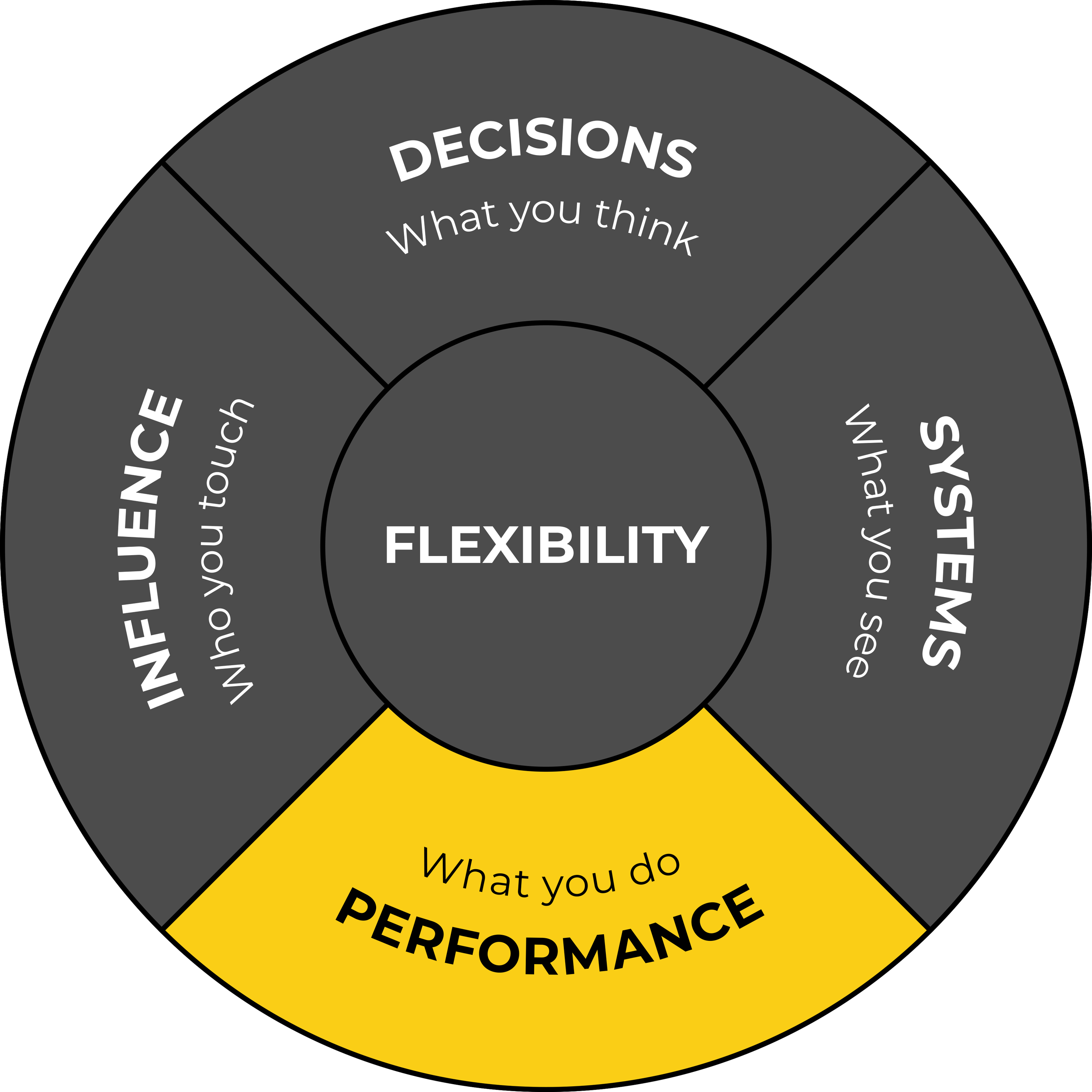
Performance is one of five core skills you’ll learn on the Not An MBA leadership programme.
Navigating the transition into senior leadership successfully means retiring old skills and rising to new challenges. In week two, we set effective boundaries.
In week five, we consider how to bring flexibility to your strengths and weaknesses and channel focus.
In the rest of the course, you’ll learn the other four skills - how to be more flexible to change, make better decisions, elevate from operational problem-solving to systems-thinking, and have more influence.