
Marama Buck
Strategic Project and Event Manager, Collaborative Aotearoa
Class of 2026
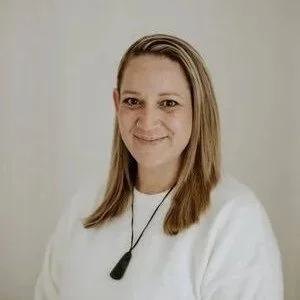
“My new understanding of systems has made my day-to-day work more manageable, less overwhelming, and more aligned to our goals.”
Marama is Projects and Event Manager at Collaborative Aotearoa. This charitable trust supports GPs and community health teams to run equitable primary care services for whānau.
In her role, Marama facilitates discussions around better ways to offer healthcare then creates resources to share those ideas. For example, she recently brought together people and primary care practitioners with lived experience of ADHD to consider ways to make being assessed for ADHD more safe, efficient, and pleasant.
Shifting from education to the health sector led Marama to doubt her leadership skills
Coming from 20+ years working as a primary school teacher and a school leader, Marama knew the craft of teaching, understood pedagogy and the education system, and felt confident in her leadership in that space. Then, in 2024, she moved to the health sector.
“I lost confidence in my leadership skills because I didn't think I had enough background knowledge. I needed to re-explore my leadership qualities, reacquaint myself with leadership strategies, and learn new ways of being a leader.”
What drew Marama to Not An MBA was a single sentence, ‘Leadership lessons that cut through the crap.’ She says: “Academic learning wasn't and isn't easy for me. I had to work really hard at university and to get where I am in my career. So, a course with personality, substance, and a more practical focus really piqued my interest.”
“A kete of knowledge I can use throughout my leadership journey”
As leaders, we can grow to rely too much on the same tools and strategies. Marama identified her leadership strength as being there to love and support people in their mahi, and she wanted to build on that base. Not An MBA delivered.
“Alicia gave me practical, usable strategies to help me move from being kind and giving to a more strategic, confident leader. I’ve a better understanding of what strategy each situation needs and I’ve added new tools to my kete of knowledge I can use throughout my leadership journey.”
Marama found one of the most impactful parts of the programme was learning how to make good decisions more effectively – to be quick, decisive, yet comprehensive. She explains: “In the past, I’d gather ideas and come up with a decision everybody was happy with. But that isn’t always an effective way to work. As leaders, we sometimes need to decide.”
She also found it valuable to be reminded that knowledge doesn't define leadership capability. She says: “I don't have to have all the answers to be an effective leader. I feel my confidence as a leader has significantly improved because I’ve a wider toolkit to help me with my decision-making and strategic thinking. There have been improvements in the way I work and what I have to offer in the strategic leadership space.”
A stronger understanding of systems
Not An MBA teaches students to take a systems view of the world. So many people have to navigate complex, frustrating, contradictory systems. This programme teaches you how to survive, and even thrive in that environment. Since being part of the programme, Marama has had direct feedback from her CEO on her deeper understanding of systems.
“I used to see issues as created by people, something we hadn't done well. If a plan didn't go to plan, I’d be really hard on myself. Now I see issues from a different viewpoint. I can take a step back and go, what system allowed those things to slip through the gap? I often say that's not an us problem, that's a system problem. That’s been noticed by my CEO.”
With her new outlook, Marama has created a system to help her prioritise. She says: “I’ve so many ideas. I want to say yes to everything. And sometimes I get overwhelmed. So, I’ve organised weekly catch-ups with my CEO to get out all my ideas and look at how each thing aligns with our core purpose.”
“Alicia taught us the 4 Ds methodology – do, defer, delegate, and delete. I use that to decide what is high-value mahi and where I can best put my time. This is a perfect example of how my new understanding of systems has made my day-to-day work more manageable, less overwhelming, and more aligned to our goals.”
“You don't need to throw ideas away to invite new ones in”
Another thing Marama appreciates about Not An MBA is how the programme doesn’t sell a single framework. She explains: “Alicia doesn’t say do these 10 things and you’ll be the best leader in the world. She doesn’t say this is the way to do things. She says here’s a way to approach things. Here are some effective tools and strategies. Add them into your existing kete and weave them into your worldview in a way that feels comfortable to you, to build upon who you already are. You don't need to throw ideas away, to invite new ones in.”
“As a Māori woman, there were some parts of the course that really challenged me and asked me to hold opposing philosophies on leadership. I am who I am – a kōhanga reo baby who grew up in Te Ao Māori – that is never not going to be my viewpoint. And what I really enjoyed about Alicia was the way that she invited me to keep my philosophy. When things challenged my world view, my ideas were received with care, openness, and an invitation to weave those things together.”
“A safe environment to be our real, raw, honest selves”
Marama recommends Not An MBA to other leaders. She says: “Whether you're starting out as an emerging leader or an experienced CEO, I don't think there’s anybody who wouldn't find value in learning the strategies in this programme. Absolutely go for it. It’s engaging. It’s worthwhile. It’s inspiring. It's real. It allows space to explore who you are, and also to learn about who other people are, in a way that feels really authentic.”
“This was a safe environment where we could be our real, raw, honest selves. There aren’t a lot of opportunities to do that because lots of us in leadership roles are confined to a white middle-class perception of what professional looks like, where you don't have emotions and it's all very non-expressive.”
“What I loved about the course is we were able to express our vulnerabilities. We were able to laugh – and we did, a lot. There were tears. There were moments of feeling this is amazing. There were moments of feeling I don't know if that sits well with me. And all those emotions were safe in the space Alicia created.”