
Norman Woods
CEO, HRV
Class of 2026
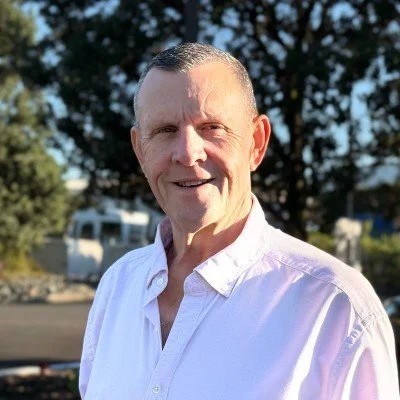
“As a CEO, I felt both vindicated and challenged by Not An MBA. I’ve now signed up four of my executive team.”
HRV was founded in 2003, installing heat recovery ventilation systems to improve indoor air quality. Over 20 years later, they sell ventilation, heat pumps, air conditioners, and water filtration systems – they’re all about warm, dry, healthy Kiwi homes.
Norman Woods began working at HRV in 2021 as Group General Manager and became CEO in 2025. He says: “Recently we did a management buyout and moved from being a corporate business to a cooperative owned by former employees and franchisees.”
“I was fortunate to lead the management buyout and the formation of the cooperative. Few people are given the opportunity to put all the knowledge from their career into a final project. The chance to put everything I've learned into practice at HRV to realise the business’s opportunities and make it more successful has been an absolute privilege.”
“Look for continuous opportunities to develop through your career.”
Why would a chief executive who’d just steered a large private sector company through such a momentous transformation seek out a programme like Not An MBA? What gap does the programme fill for someone already operating at that level?
Norman explains: “One thing that has sat with me through my career is I have no degree. I have no additional learning outside corporate training and being self-taught. So, I'm constantly looking for opportunities to fill that gap. How do I become better? How do I keep learning? How do I fill that cup I didn't fill when I was young?”
“I’m constantly looking for different views, and Alicia's posts on LinkedIn drew my attention. Her authenticity, honesty, and forthrightness drew me in. The things she writes about are thought provoking. When Not an MBA came up. I thought it was a great opportunity to grow, not only for my own development, but to get alternative views to positively impact HRV.”
“The programme structure was really smart with time to test and learn.”
Norman had initial reservations about Not An MBA being online. He says: “I'm not great online. I prefer in person. But that doubt quickly dispelled because Alicia not only kept the sessions active and involved, but there were also breakout sessions, group conversations, and the chat room running on the side. It felt like you were in the room with people.”
A highlight for Norman was the programme structure. He says: “We started off with a good foundation and built on it over eight weeks. I enjoyed that we set aside Tuesday morning to learn and delivered an assignment on Friday. That gave us the opportunity to take what we'd learned and put it into practical application. My strategic lead team didn't know I was using them as test dummies, but I tried out a couple of things that worked really well for me.”
“Something I've taken away from the programme, is I now try to get my team to finish assignments by Friday because that allows them to have their weekend. If something is due on Monday, guaranteed people are working on Sunday, and that's not good.”
“There’s a leadership imperative to be clear and intentional.”
Leading a business can be isolating. Norman says: “Being a CEO is a pretty lonely place to be. I’m doing things strategically and whilst I’ve a team around me to consult and mentors to help me make decisions, it can be lonely because I make decisions and move on.”
“Not An MBA affirmed how I operate. Having Alicia say: ‘Here’s a way to approach this situation and here’s the research this model is based on,’ gave me more confidence in my approach. I realised I'd been doing things that way but I hadn't understood why until now.”
Norman believes leaders have an imperative to be clear and intentional. He says: “It's important your intentions have strong reasoning. If you understand what you want to do and you've a clear foundation for your decision, it's easier for people to understand you. There were a lot of aha moments in the programme that gave me a better foundation. Now when I'm talking with my team about how to approach a problem, I’ve practical examples to use.”
The programme also met Norman’s desire to expose himself to different views. He says: “I gathered a lot of alternative views from Alicia and other people in the cohort. I felt both vindicated and challenged. Even when I didn’t agree with an opinion, I found myself making a decision a few months down the line and balancing it with that different point of view.”
Getting better buy in for decisions from your whole team
Another Not An MBA highlight for Norman was identifying a gap in HRV’s way of working. Norman explains: “Alicia asked us to reflect on what wasn’t working for us and this exercise coincided with some robust debates at work. We're busy with important projects and this is our future livelihood, so everybody in the cooperative has an opinion, everybody wants to be involved in consultation, and everybody wants to be part of decision-making.”
Despite the projects’ importance, Norman and his team were struggling to get buy-in from some cooperative members. Norman says: “I couldn't understand why because we do robust consultation and debate and we're also clear that this is not decision by consensus. This is a company. One person is responsible for each decision. If your idea isn’t taken forward, you still commit to the decision because we’re not going to succeed with dissent.” In a Not An MBA session, it clicked for Norman that members weren’t buying into decisions because his team weren't closing conversations and explaining how decisions were made.
“We weren't going back and saying: ‘We heard what you said, we're not taking your idea for these reasons and these are the reasons we’re doing this instead.” Because we weren't closing that gap, we weren't getting 100% commitment to decisions. People thought the topic was still up for debate. Worse, people thought they were wasting their time consulting on projects because they didn’t feel they had been heard.”
Norman reviewed HRV’s decision-making process with his team. He says: “Closing the conversation was part of our way of working, but we’d neglected that part of the process. We're 100 times better at doing that now. Now we're closing off the debate and explaining why we've taken a decision and why we haven't used an idea. People feel valued because we’ve heard what they had to say, and we’ve told them why we're not using their idea.”
“There’s a bit more swagger in my step.”
Norman had personal learnings as well as business insights from Not An MBA. He conducted an impromptu 360 degree review as an exercise during the programme, and recalls: “I surveyed our members and my leadership team about things I needed to work on. There was lots of feedback that boosted my morale and I also got wonderful feedback on things I could look at. Some things I knew I needed to work on. Other things I didn’t know.”
“The validation from Not An MBA for the way I’m approaching things, and also knowing what I’m missing, does give me more confidence making decisions. I've never lacked confidence but I use any opportunity I can to give myself more. There's a bit more swagger in my step, and that’s important as a leader because it gives your team confidence too.”
“There's so much to learn from Alicia. I love her forthrightness. I can’t emphasise enough how much I enjoyed her authenticity, honesty, and bravery. She's not afraid to put her views on the table to be challenged. She's incredibly smart. You don't often have the opportunity to learn from someone with such depth of knowledge, or such a diverse group.”
“Take the opportunity and immerse yourself in Not An MBA. Don't be a silent wallflower because the more you open yourself to it and make yourself vulnerable by expressing your opinions and testing ideas, the better. It's well worth it. So much so, I've signed up four of my team to do the next Not an MBA. It's an opportunity for them to grow and learn now too.”