
Evan Raymond
Principal Planner-Sustainability, City of Moreton Bay
Class of 2026
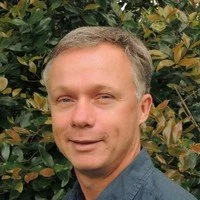
“It's easy to blame people. Changing a system is harder, but it's better long term because you get something done.”
Evan works with the City of Moreton Bay in Southeast Queensland. He looks after sustainability across the organisation, saying “I’m looking at climate change adaptation at the moment. This includes long-term strategy as well as developing a plan we can start to implement now. What actions can we take day-to-day to make our future more resilient?”
Sustainability planning is not without challenges. Evan explains: “I was looking for a more holistic systems approach to planning. A net zero plan was being finalised when I started at council. It was adopted and made public, then implementation was very challenging.”
Mulling over why the net zero plan failed to get the traction envisaged in the early stages, Evan realised the planning process wasn’t right. He says: “There was a lot of consultation and people agreed with the net zero plan, but they didn't think it was their responsibility. The reality was that the plan didn’t fit the context. While there was a desire to be net zero, there aren’t processes to support that change. Action is now beginning to slowly happen.”
“I wanted a systems approach, different to how we do other strategies.”
With an even bigger and more complex plan on his plate, Evan knew he needed a different approach. He says: “Taking net zero action can be quite simple. You do something differently, you reduce carbon a certain amount, and in many cases you save money. But something like climate change is less certain and you may not see results for many years. To plan for sea level rise, you may need to look 50 years in advance. So, I thought let's not go down the same path for our climate adaptation plan. Let's take a different tack.”
“I wanted a systems approach, different to how we do other strategies. I wanted an iterative approach rather than saying: ‘Here’s a plan, let's implement it.’ I wanted to engage a larger group. Climate change isn't just a sustainability issue. It affects governance, asset management, services, and our people out in the field. The issue is everybody's issue.”
Evan wasn’t working with one area of council. He says: “Adapting to climate change is really a transformational project, changing practices across the organisation. And when I looked at Not An MBA, I thought, this will help me crystallise a lot of ideas into action.”
“I don’t think anyone had mapped where decisions happen before.”
Not An MBA gave Evan tools to take a different approach to climate change planning. He recalls; “I did some system mapping to show how I was starting to think about where we should go. That was a really good tool to share with people because it was a big mind map and I don't think anyone had mapped where decisions happen in the organisation before.”
Evan’s system mapping exercise identified some simple climate resilience actions that could kickstart the process of change, and he proposed taking a more phased approach.
“Our new approach is to educate and engage people with climate change over 18 months. We’ll do small pilot projects to get the organisation on board, then determine what the long-term plan will be. I've had a few meetings explaining the process, and everyone's going, this really makes sense. The new approach is actually landing.”
His frustrating experience with the net zero plan has made Evan extra focused on getting buy in for the climate adaptation plan. He says: “To get engagement, I want to set up a working collab group from different sections of council and ask them what they think the most important pilot project should be, so it's not just me saying this is what we need to do.”
“The system is creating the problem rather than the person.”
A permaculture background meant Evan already had a strong systems approach to thinking. He says: “Not An MBA has given me tools to bring that approach into the context of local government. I’m trying to step back and say: ‘What's the real issue here?’ I’m listening more when people say where they're coming from and what they see as barriers.”
“Yesterday, we were trying to figure out the blocks for a particular decision. A lot of the time, in a situation like that, we’d blame a person, whereas now because of Not An MBA, we talk about the system creating the barrier. One person can leave and another come in, but you still get the same outcome, so the system is creating the problem rather than the person. It's easy to blame people. Changing a system is harder, but it's better long term because then you can actually get something done.”
Evan has had great feedback on his fresh approach. He says: “Everyone up to our general managers has been saying this systems approach is really good. My manager said we've never done a plan like this before. And I thought that's brilliant, we've gone beyond what we did last time. You can't keep doing the same thing and expect a different outcome. If it's not working, you have to do something different. I should have done this earlier!”
“It doesn't matter where you sit, you have agency to make change.”
Not An MBA has also given Evan more confidence in his ability to have an impact. He says: “One insight from the programme is everyone has agency. It doesn't matter where you sit in an organisation, whether you're executive director or a project officer, you have agency to make change. Every time you speak up in a meeting you can have an impact.”
“You don't always know the power of your conversations. I've found recently sometimes I’ll say something and it doesn't land well. Then the topic will come back in other meetings and other people will say the same thing. Some things take a while to land. An idea may resonate in the room or months down the track.”
“If you're looking for a practical application of systems thinking into reality, Not An MBA helps with developing strategy and is one of those courses you’ll always reflect back on. When I’m doing something, one of the gems I learned with Alicia will pop into my head and change my actions. The programme also really helped with how I interact with people at work.”
“I'm willing to say what I think more, rather than wondering what people will think of what I say. I've always held back on that a bit. I've tried to use local government speak and not be too out there. But now I'm just saying this is the way I think we should do this. Having agency on your perspective is important. But having constant confidence to be authentic is the biggest thing because when you show up differently, it changes the room.”